
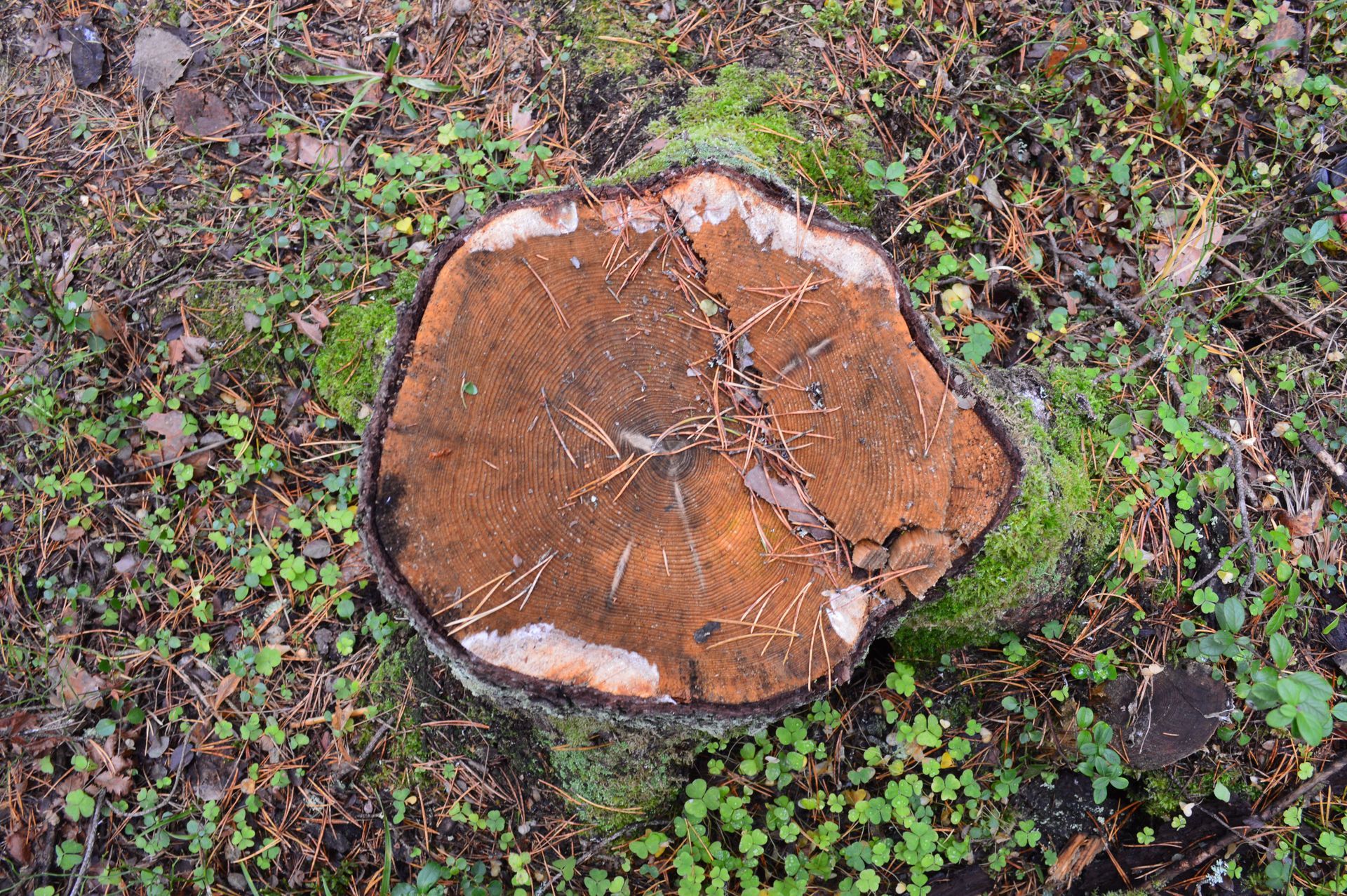
Stumps That Refuse to Let Go
Stump grinding in Granby for established yards where root mass blocks replanting, fencing, or open ground use
Better Home Solutions LLC handles stump grinding in Granby for property owners dealing with the wide, stubborn root systems that mature trees leave behind on established lots. Red maples, white oaks, and eastern white pines common across Granby's wooded properties grow root systems that spread well beyond the visible stump, and clay-heavy soil compresses those roots tightly around buried rock. A stump that looks manageable at the surface can anchor several feet of lateral root mass below grade. Better Home Solutions uses professional-grade grinding equipment built to work through exactly that combination of clay, stone, and dense hardwood.
The process starts with the grinder reducing the stump and any surface roots below grade until the area sits flush with the surrounding lawn. Working through Granby's rocky, clay-heavy soil requires equipment with enough torque to handle resistance without damaging surrounding turf or landscape features nearby. Once the stump is ground down, the resulting wood chips are left on-site by default and can be spread across the cleared area or used as mulch. If you prefer bare ground, hauling is available for an additional charge.
Request an on-site estimate to review the stump location, root spread, and site access before work begins.
What the Site Looks Like Once Grinding Is Complete
After grinding, the cleared area is level with the surrounding grade and no longer presents a tripping hazard or an obstacle to mowing, fencing, or new planting. The wood chip material left in the cavity breaks down over time and can be seeded over, covered with sod, or planted directly depending on your plans for the space. Better Home Solutions leaves the site clean at the end of each job, with the ground ready for whatever comes next—lawn restoration, a new garden bed, or fence post installation.
What you'll notice immediately after completion is that the stump and the raised root collar around it are gone, and the surface is walkable and level. There are no exposed roots left at grade to catch a mower blade or interrupt foot traffic. Properties along the Farmington River corridor often have multiple mature trees near the yard perimeter, and clearing several stumps at once gives those areas usable ground that was previously interrupted by decaying root mass.
Better Home Solutions operates as an owner-operated business with a direct working partnership with an established tree contractor, which means stump grinding can be coordinated alongside tree removal when both are needed on the same property. The owner manages the work personally, and the equipment used is matched to Connecticut's rocky, clay-heavy terrain rather than scaled-down residential gear.
What Property Owners Ask About Stump Grinding
The questions below address how stump grinding actually works on Granby properties, what the process involves, and what to expect when the job is finished.
What happens to the root system below the surface after grinding?
The grinder removes the stump and the surface root structure down below grade, but deep lateral roots are left in the soil to decay naturally over time. In Granby's clay soil, those deeper roots break down slowly, but they do not prevent replanting, sod installation, or fence post setting in the cleared area.
How deep does the grinding go, and why does that depth matter?
Most stumps are ground to a depth of six to twelve inches below grade, which is sufficient to bring the surface flush and eliminate the root crown. Depth affects whether the area can accept sod or seed immediately after work is completed, so the target depth is matched to your intended use of the ground.
What should you do to prepare the area before a stump grinder arrives?
Clear any rocks, garden edging, or decorative material within a few feet of the stump so the equipment can work without obstruction. Letting the operator know about any buried irrigation lines, utility markers, or shallow hardscape nearby is also important before grinding begins.
How does rocky, clay-heavy soil in Granby affect the grinding process?
Clay soil holds moisture tightly around the root system, which makes root material denser and more resistant than stumps in sandy or loamy ground. Professional-grade equipment handles that resistance without stalling, but the operator adjusts the approach based on visible root spread and any rock outcroppings close to the stump.
What does the finished area need before grass or plants can establish?
The wood chip cavity left after grinding should be backfilled with topsoil if you're seeding or laying sod, since chips alone don't provide the nutrient base grass needs to root. If you're planting shrubs or trees, the chips can be worked into the surrounding soil as organic material before the new plant goes in.
Better Home Solutions also performs stump grinding in Avon, Fairfield, Branford, Manchester, and Clinton. To get started in Granby, schedule a site visit so the stump location, access, and root spread can be reviewed before any equipment is brought to the property.