
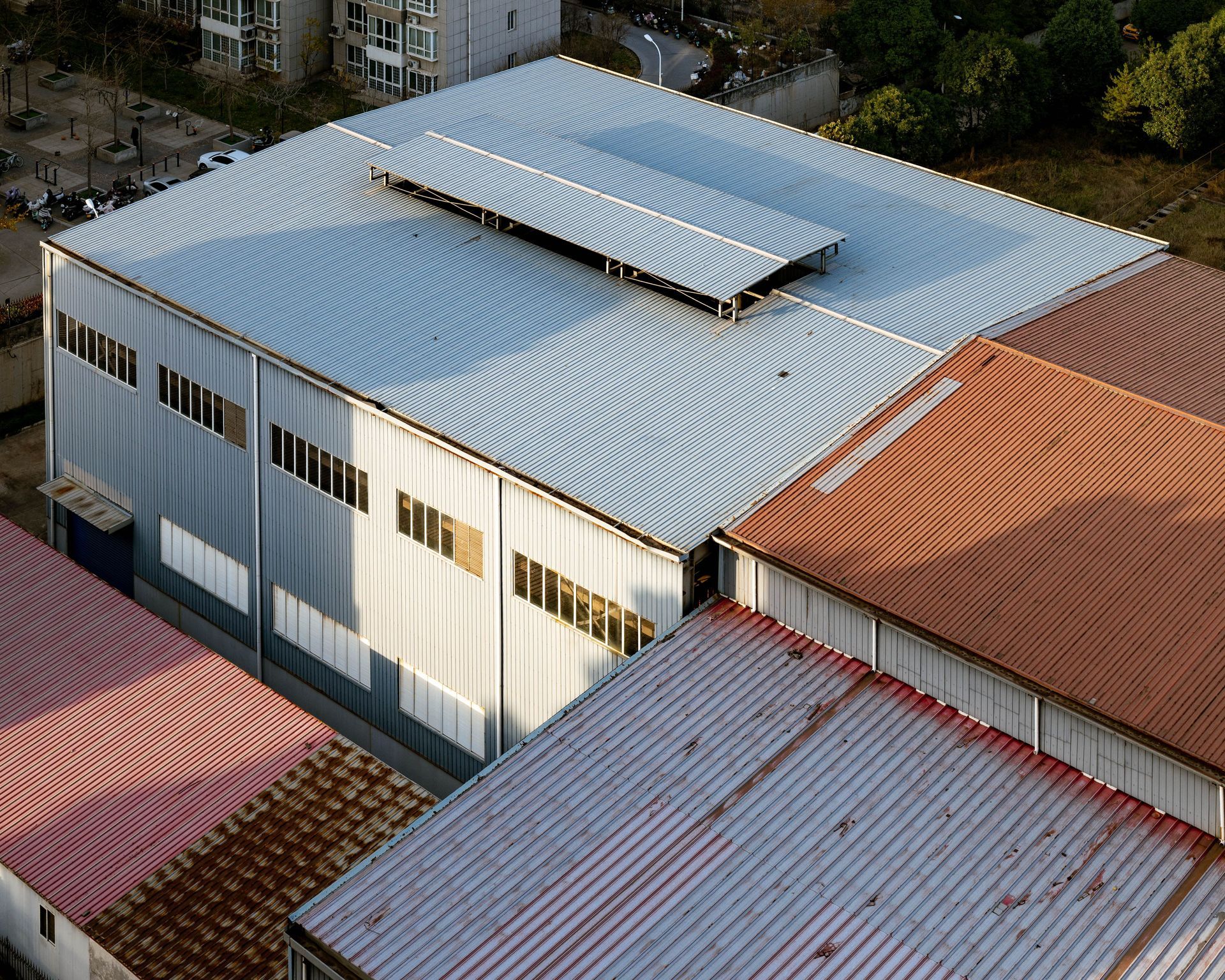
Roof Systems Built Around Active Business Operations
Commercial roofing in Granby for office buildings, retail properties, and light industrial facilities requiring full system management
A commercial roof failure isn't just a building problem—it's an operational one. Tenant complaints, inventory exposure, and insurance claims all follow water intrusion on a commercial property, and the costs compound faster than on a residential structure because the square footage and system complexity are both larger. Better Home Solutions LLC handles commercial roofing across Granby and Connecticut, managing full roof systems with commercial-grade materials, coordinating work around active tenant operations, and processing insurance claims when damage is the trigger for the project.
Every commercial project begins with a site assessment that establishes current deck condition, drainage performance, penetration flashing integrity, and the scope of any damage before a material or method recommendation is made. Scheduling is coordinated so that work happens during hours that minimize disruption to your tenants or customers—commercial roofing that ignores operating hours creates liability and tenant relations problems that responsible contractors plan around from the start. Better Home Solutions LLC uses commercial-grade Owens Corning materials rated for the building's exposure and roof traffic demands.
Request a commercial site assessment to establish what your roof system needs and how the work can be scheduled around your operations.
The Difference Between Commercial and Residential Roof Scope
Commercial flat and low-slope roofs accumulate failure patterns that pitched residential roofs don't: standing water at drainage points, membrane separation at penetrations for HVAC curbs and conduit runs, and fastener pull-through at parapet walls. In the Huckleberry Hill commercial corridor and similar Hartford County properties, many commercial buildings were built during periods when insulation values and membrane specifications were significantly lower than current standards, which means a re-roofing project often involves adding rigid insulation to bring the system up to current code before the new membrane goes down—a step that affects both material cost and scheduling that needs to be factored in before the estimate is final.
Once work is complete, what building managers and owners notice is the elimination of the active leak points, improved interior temperature consistency in areas that were previously losing conditioned air through failed insulation sections, and a documented warranty package that satisfies insurance carrier requirements. Better Home Solutions LLC provides full documentation for warranty records and building files, which is a requirement many commercial property managers need to satisfy their property insurance renewals.
When insurance claims are involved, the team manages the claim coordination with your carrier directly, providing the damage documentation, material specifications, and scope itemization that adjusters require—reducing the back-and-forth that delays project start on insurance-driven repairs.
Questions Before Starting Your Commercial Roofing Project
Commercial property owners and managers have different priorities than residential clients—the questions below address the operational and structural considerations that matter most when managing a commercial roof project.
What does a commercial roof deck inspection involve?
The deck inspection checks for delamination in wood decking or corrosion in metal decking, fastener pull-through at high-traffic areas, insulation compression from water saturation, and whether the existing deck can support a recover system or requires tear-off and replacement.
How is work scheduled to avoid disrupting building tenants?
Before work begins, the project schedule is reviewed against your tenant operating hours, delivery schedules, and any noise or odor restrictions in your lease agreements, and work phases are sequenced to keep active areas of the building accessible throughout the project.
Why does HVAC curb flashing fail more often on commercial roofs than other penetrations?
HVAC curbs carry mechanical vibration that works flashing fasteners loose over time, and the condensate drainage from rooftop units creates constant moisture contact at the curb-to-membrane junction—both conditions accelerate seal failure faster than static penetrations like pipe vents.
What documentation is provided after a commercial roofing project is complete?
You receive a warranty package based on the materials installed, photographs of pre- and post-installation deck and membrane condition, and a written scope record that satisfies most insurance carrier documentation requirements for property coverage renewals.
How does the insurance claim process work when storm damage is the reason for the repair?
The team prepares the damage assessment, material specifications, and scope documentation required by your carrier's adjuster, coordinates the inspection visit, and manages the approval process so the project can begin once the claim is settled rather than waiting on paperwork.
Better Home Solutions LLC also performs commercial roofing in Avon, Fairfield, Branford, Manchester, and Clinton. If your commercial property in Granby has an aging roof system or active leak damage, schedule a site assessment with Better Home Solutions LLC to get a documented scope of what the repair or replacement involves.